


_edited_ed.png)
Why Egg Production Changes During Summer
- 2 days ago
- 4 min read
If you've noticed fewer eggs in your nesting boxes during the summer months, you're not alone. While many chicken keepers expect spring to bring a surge in egg production, hot weather often has the opposite effect. Even healthy, well-cared-for hens may lay fewer eggs during a heatwave.
Understanding why this happens can help you support your flock and keep them healthy throughout the hottest part of the year.
Does Hot Weather Affect Egg Production?
Yes. High temperatures are one of the biggest seasonal factors that influence egg production. Chickens are most comfortable when temperatures range between 65°F and 75°F (18°C to 24°C). Once temperatures climb above 85°F (29°C), hens begin using more energy to stay cool instead of producing eggs.
This natural response helps protect their health, but it often results in fewer eggs.
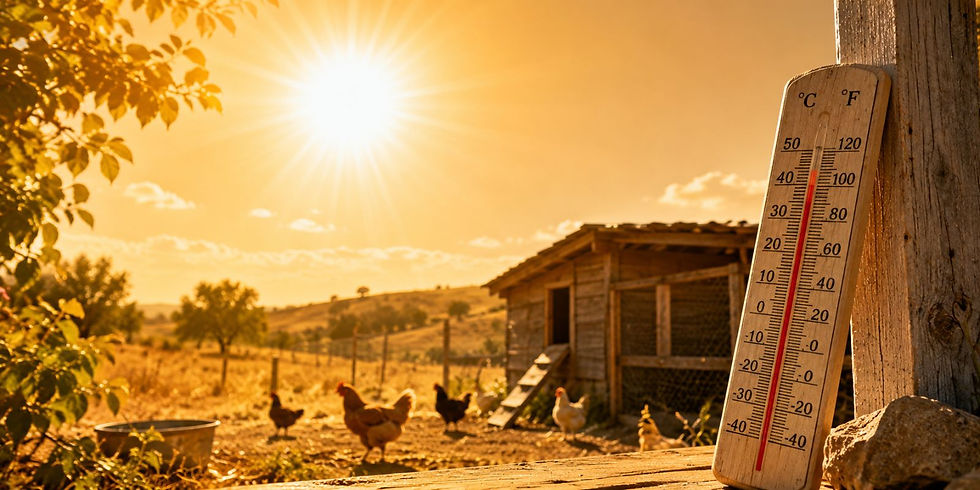
1. Heat Stress Reduces Egg Production
When chickens become overheated, their bodies shift into survival mode. Instead of focusing on laying eggs, they prioritize regulating body temperature.
Signs of heat stress include:
Panting
Wings held away from the body
Drinking more water
Spending more time resting
Reduced appetite
The more severe the heat stress, the greater the impact on egg production.
2. Chickens Eat Less During Hot Weather
Producing eggs requires a significant amount of protein, calcium, and energy.
During summer, chickens naturally eat less because digestion generates body heat. As their feed intake decreases, they consume fewer nutrients needed to produce eggs consistently.
This is one of the main reasons laying slows during heatwaves.
3. Water Becomes More Important Than Ever
A chicken's egg is made up of about 75% water. If hens don't drink enough, egg production often declines quickly.
Always provide:
Fresh, cool water
Multiple water stations for larger flocks
Shade around waterers
Frequent refills on very hot days
Even a few hours without adequate water can affect laying performance.

4. Eggshell Quality May Decline
Hot weather doesn't only affect the number of eggs. It can also affect their quality.
You may notice:
Thinner shells
Smaller eggs
Pale shells
Occasional shell-less eggs
This happens because heat stress can interfere with calcium metabolism and reduce nutrient intake.
5. Longer Days Don't Always Mean More Eggs
Many people assume that because summer has the longest daylight hours, hens should lay more eggs.
While daylight helps stimulate egg production, extreme heat can outweigh this benefit. During prolonged hot weather, the negative effects of heat stress often have a greater impact than the extra daylight.
6. Molting Can Overlap with Late Summer
Some hens begin their annual molt toward the end of summer.
Growing new feathers requires a great deal of protein and energy, so hens often pause laying while they molt. If egg production drops in late summer, molting may be part of the reason.

7. Older Hens Are More Sensitive
Age also plays a role.
Older hens generally produce fewer eggs than younger birds and may struggle more during periods of extreme heat. Their recovery after a heatwave may also take longer.
How to Help Your Chickens Keep Laying During Summer
While you can't eliminate the effects of high temperatures, you can reduce their impact.
Keep the Coop Cool
Good ventilation and shade help prevent the coop from becoming excessively hot. Open vents, improve airflow, and ensure your chickens have access to cooler outdoor areas.
Provide Plenty of Fresh Water
Check waterers several times a day during hot weather and keep them clean. Adding ice bottles or frozen water jugs can help keep water cooler for longer.
Feed During Cooler Parts of the Day
Offer feed early in the morning or later in the evening when temperatures are lower. Chickens are more likely to eat when they're comfortable.
Offer Healthy Cooling Treats
Hydrating treats can encourage water intake while providing extra nutrition.
Popular summer treats include:
Watermelon
Cucumber
Frozen peas
Lettuce
Berries
Treats should be given in moderation and should never replace a balanced layer feed.

Let Chickens Out Early
Early mornings are the coolest part of the day. Giving your flock access to the run at sunrise allows them to forage and eat before temperatures rise.
An automatic chicken coop door can help by opening automatically at sunrise every day, giving your chickens more time outdoors during the coolest hours without requiring you to wake up early.
When Should You Be Concerned?
A temporary drop in egg production during a heatwave is completely normal.
However, if hens stop laying altogether or show additional symptoms such as severe lethargy, weight loss, persistent diarrhea, or difficulty breathing, consider consulting a veterinarian. Illness, parasites, or nutritional deficiencies may also be contributing factors.
Final Thoughts
A decrease in egg production during summer is a natural response to high temperatures. When hens are too hot, they focus on staying cool rather than producing eggs. Fortunately, simple steps like providing fresh water, improving ventilation, offering shade, and letting chickens out early can make a significant difference.
Remember, a healthy flock is more important than a full egg basket. By helping your chickens stay cool and comfortable, you'll support both their well-being and a quicker return to normal egg production once the weather cools down. 🥚☀️


Comments