


_edited_ed.png)
The Ultimate Spring Chicken Coop Cleaning Checklist
- May 15
- 4 min read
Spring is the perfect time to give your chicken coop a deep clean after a long winter. Warmer weather, longer days, and increased flock activity make seasonal cleaning essential for keeping your chickens healthy, productive, and happy. A clean coop also helps reduce odors, prevent pests, and minimize the risk of disease.
Whether you keep a small backyard flock or manage a larger chicken setup, this ultimate spring chicken coop cleaning checklist will help you refresh your coop for the new season.

Why Spring Coop Cleaning Matters
During winter, moisture, dust, droppings, and old bedding can quickly build up inside the coop. As temperatures rise in spring, bacteria, mold, mites, and flies become more active.
A proper deep clean helps:
Improve air quality inside the coop
Reduce ammonia buildup
Prevent parasites and pests
Keep nesting boxes cleaner
Support healthier egg production
Extend the lifespan of your chicken coop
Regular spring maintenance also makes day-to-day chicken keeping much easier throughout the warmer months.
Step 1: Move Your Chickens to a Safe Area
Before you begin cleaning, move your chickens to a secure temporary space such as:
A fenced chicken run
A free-range yard
A separate enclosure
A portable chicken tractor
This keeps your flock safe and stress-free while you clean the coop thoroughly.
Step 2: Remove Everything From the Coop
Take out all removable items, including:
Old bedding and litter
Nesting box material
Feeders and waterers
Roost bars
Dropping trays
Toys and enrichment accessories
Old bedding can often be composted and later used in the garden.
Cleaning Tip
Wear gloves and a dust mask when removing dry bedding and droppings to avoid breathing in dust particles.
Step 3: Sweep, Scrape, and Remove Debris
Use a broom and scraper to clean:
Dried manure
Feathers
Cobwebs
Dust buildup
Mud and dirt
Pay extra attention to corners, cracks, and roosting areas where mites and insects may hide.
Step 4: Wash and Disinfect the Coop
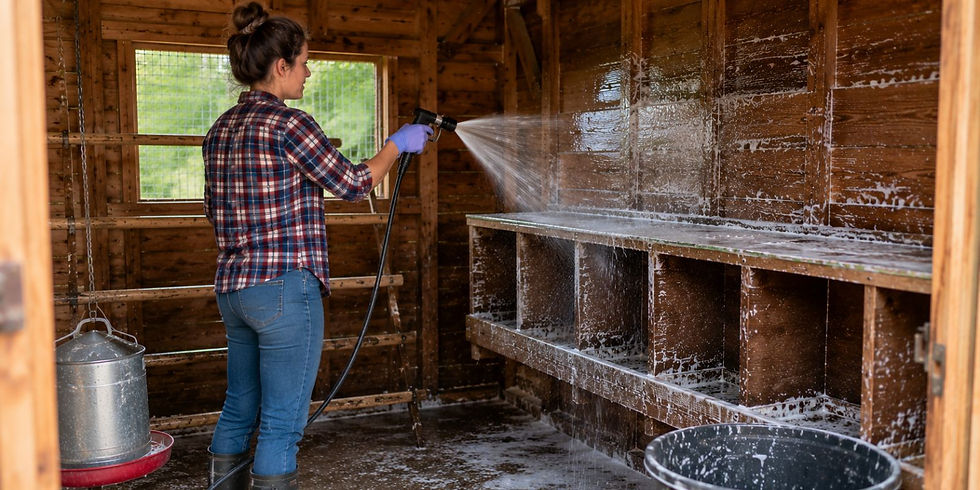
Clean all coop surfaces with warm water and a chicken-safe cleaner. This includes:
Walls
Floors
Nesting boxes
Roost bars
Doors and handles
Many chicken keepers use:
White vinegar and water
Mild soap
Poultry-safe disinfectants
Allow the coop to dry completely before adding fresh bedding. Moisture inside the coop can encourage mold and bacteria growth.
Step 5: Inspect for Damage and Pests
Spring is the ideal time to check your coop for winter damage.
Inspect for:
Red mites or lice
Mold or mildew
Rotten wood
Water leaks
Loose screws or hinges
Gaps predators could enter through
Predator protection is especially important during spring when wildlife becomes more active.
Step 6: Upgrade Your Coop for Easier Maintenance
Spring cleaning is also the perfect opportunity to improve your chicken coop setup and reduce future maintenance.
Many chicken keepers now upgrade to smart coop systems such as the RUN-CHICKEN Coop 2.0, which combines automation, predator protection, and modern coop management features. The system integrates with automatic coop doors and helps simplify daily flock care.
Automatic chicken coop doors can:
Open and close automatically at sunrise and sunset
Improve predator protection at night
Reduce daily manual work
Help maintain a consistent routine for your flock
The RUN-CHICKEN automatic coop door includes features like light sensors, anti-pinch protection, weather resistance, and app-based controls. The doors are designed for easy installation and can operate in extreme weather conditions.
Adding automation during your spring coop refresh can save time throughout the year while helping keep your flock secure.

Step 7: Refresh Nesting Boxes
Clean and disinfect nesting boxes thoroughly before adding fresh nesting material.
Popular options include:
Pine shavings
Straw
Hemp bedding
Fresh nesting material helps keep eggs cleaner and improves comfort for laying hens.
Step 8: Clean Feeders and Waterers
Dirty feeders and waterers can spread harmful bacteria quickly.
Scrub all feeding equipment thoroughly with hot water and inspect for:
Mold
Algae buildup
Cracks
Leaks
Fresh water becomes especially important as temperatures begin to rise in spring and summer.
Step 9: Improve Coop Ventilation
Good airflow helps prevent moisture buildup and ammonia odors.
Check that:
Air vents are clear
Windows open properly
Fresh air circulates without creating drafts
Proper ventilation supports respiratory health and keeps the coop more comfortable during warmer weather.
Step 10: Add Fresh Bedding
Once the coop is fully dry, spread fresh bedding throughout the coop and nesting boxes.
Many backyard chicken keepers prefer:
Pine shavings
Chopped straw
Hemp bedding
Sand for droppings boards
Fresh bedding helps absorb moisture, control odors, and keep chickens comfortable.

Essential Spring Chicken Coop Cleaning Supplies
Here’s a quick checklist of useful cleaning supplies:
Gloves
Dust mask
Broom
Scraper
Bucket
Scrub brush
Chicken-safe disinfectant
Fresh bedding
Trash bags or compost bin
Having supplies prepared ahead of time makes seasonal coop cleaning much easier.
How Often Should You Deep Clean a Chicken Coop?
While spot cleaning should happen weekly, most chicken owners perform a full deep clean:
At the beginning of spring
Mid-summer if needed
Before winter
Cleaning frequency depends on:
Flock size
Coop size
Bedding type
Ventilation
Weather conditions
Final Thoughts
A thorough spring chicken coop cleaning helps create a healthier, safer, and more comfortable environment for your flock. By following this ultimate spring chicken coop cleaning checklist, you can reduce pests, improve coop hygiene, and prepare your chickens for a productive season ahead.
Upgrading your setup with modern automation tools like the RUN-CHICKEN Coop 2.0 and automatic coop doors can also make chicken keeping easier, safer, and more convenient year-round.


Comments